T&T’s National Sargassum Management Plan
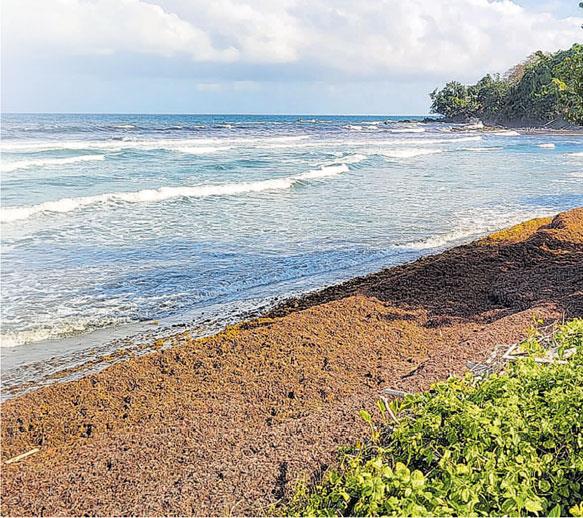
A sargassum build-up along the shoreline at Hope Bay, Tobago, last April. PHOTO COURTESY STEVE LALLBEHARRY
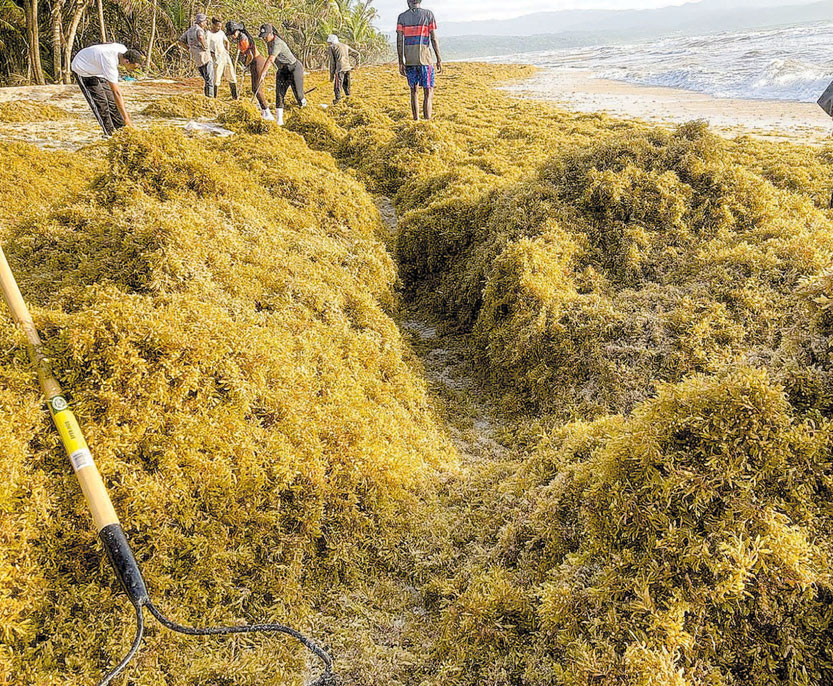
Nature Seekers members engage in a sargassum clean-up exercise at Matura Bay last April. PHOTO COURTESY NATURE SEEKERS


During Easter vacation, many folks go to the beaches or turtle watching. But once again, they will be faced with mounds of rotted sargassum (brown seaweed).
Not a pleasant sight, but unfortunately, large quantities of sargassum are forecast to be washing up along our shores during the current Easter vacation period. This occurrence has had significant negative impacts, particularly on coastal communities and livelihoods, public health, tourism and fisheries since 2011.
In Trinidad and Tobago, sargassum influxes have been reported along most of our coastlines and Government has been expending funds annually to clean up and dispose of the large biomass deposits.
While Sargassum Response Plans were developed independently for Trinidad and Tobago, clean-up efforts for both islands remained ad hoc.
In August 2024, the Cabinet appointed a multi-sectoral National Sargassum Task Force (NSTF) comprising state agencies, as well as non-governmental organisations (NGOs), to coordinate sargassum management response nationally.
The NSTF recognised that there was a lack of policy which addressed the collection, disposal and utilisation of sargassum, gaps in the legislation, lack of budget allocation for removing sargassum, no sar-gassum forecasting locally or an early warning system, and a general lack of public education or awareness. To address these challenges, the NSTF has developed a National Sargassum Management Policy, which it hopes to finalise through a public consultative process.
The goal of the management policy is to foster a collaborative, environmentally responsible and economically beneficial approach to sargassum management through early warning, efficient removal, safe disposal and sustainable reuse, to minimise adverse impacts on human health, ecosystems and coastal economies.
The policy hopes to ensure that sargassum influx within the coastal nearshore areas and onshore is managed and addressed in a timely and efficient manner, and that information is disseminated among all relevant stakeholders, including coastal communities, and negative impacts are either prevented or minimised.
The policy provides adaptive strategies and guidance for the monitoring, collection, storage and disposal of sargassum . It aims to encourage meaningful collaboration and communication among key stakeholders at all levels and throughout the process, from early warning to public education and awareness to clean up/removal. There are still many uncertainties associated with sargassum influx, so adaptive management is required.
There is no “business-as-usual” scenario yet.
The National Sargassum Management Policy is now available for public comment. It can be accessed on the website of the Institute of Marine Affairs (IMA) using the following link: www.ima.gov.tt and comments can be submitted to the email address: sargassumfeedback@ ima.gov.tt.
The NSTF has also been consulting with local and foreign business stakeholders to develop a business strategy for the disposal of sargassum, turning this waste into wealth.
The objective of this strategy is to develop a nationally coordinated sargassum industry that ensures a reliable supply,safe handling and environmentally responsible processing. It aims to support inclusive participation of coastal communities and small and medium enterprises (SMEs) and drive economic diversification through multiple high-value value chains that meaningfully position Trinidad and Tobago within the global marketplace for sargassum products.
To help assist with sargassum clean-up in water and on land, Trinidad and Tobago is receiving equipment through a Japanese-funded regional project, titled “Improving National Sargassum Management Capacities in the Caribbean”, that is being implemented by the United Nations Development Programme (UNDP).
Thus far, the NSTF have received tractors and workboats. Trucks, ATVs, hydrogen sulphide monitors and protective gear are carded to arrive in the near future. The equipment is vested with the Ministry of Rural Development and Local Government and the Tobago House of Assembly to operationalise.
Scientists have determined that sargassum blooms in the Atlantic are fuelled by a combination of factors, including altered ocean currents and upwellings, warming ocean temperatures associated with climate change and increased nutrient availability (Louime et al, 2017b). These issues, if left unchecked, are likely to continue supporting significant sargassum events into the future, according to the 2021 UN Environment Programme report.
The annual mass influxes of sargassum into the Caribbean Sea, though unpredictable in volume and trajectory, are now being considered as the “new normal”, requiring sustainable management responses and long-term adaptation. For Trinidad and Tobago to effectively manage sargassum influxes, we require an all-of-society approach, partnerships between government, private sector, NGOs and you, the citizens of Trinidad and Tobago. We need you to be engaged in sargassum management and provide your comments on the draft National Sargassum Management Policy. We look towards viewing this not as a waste management issue but as a natural resource.
Not a pleasant sight, but unfortunately, large quantities of sargassum are forecast to be washing up along our shores during the current Easter vacation period. This occurrence has had significant negative impacts, particularly on coastal communities and livelihoods, public health, tourism and fisheries since 2011.
In Trinidad and Tobago, sargassum influxes have been reported along most of our coastlines and Government has been expending funds annually to clean up and dispose of the large biomass deposits.
While Sargassum Response Plans were developed independently for Trinidad and Tobago, clean-up efforts for both islands remained ad hoc.
In August 2024, the Cabinet appointed a multi-sectoral National Sargassum Task Force (NSTF) comprising state agencies, as well as non-governmental organisations (NGOs), to coordinate sargassum management response nationally.
The NSTF recognised that there was a lack of policy which addressed the collection, disposal and utilisation of sargassum, gaps in the legislation, lack of budget allocation for removing sargassum, no sar-gassum forecasting locally or an early warning system, and a general lack of public education or awareness. To address these challenges, the NSTF has developed a National Sargassum Management Policy, which it hopes to finalise through a public consultative process.
The goal of the management policy is to foster a collaborative, environmentally responsible and economically beneficial approach to sargassum management through early warning, efficient removal, safe disposal and sustainable reuse, to minimise adverse impacts on human health, ecosystems and coastal economies.
The policy hopes to ensure that sargassum influx within the coastal nearshore areas and onshore is managed and addressed in a timely and efficient manner, and that information is disseminated among all relevant stakeholders, including coastal communities, and negative impacts are either prevented or minimised.
The policy provides adaptive strategies and guidance for the monitoring, collection, storage and disposal of sargassum . It aims to encourage meaningful collaboration and communication among key stakeholders at all levels and throughout the process, from early warning to public education and awareness to clean up/removal. There are still many uncertainties associated with sargassum influx, so adaptive management is required.
There is no “business-as-usual” scenario yet.
The National Sargassum Management Policy is now available for public comment. It can be accessed on the website of the Institute of Marine Affairs (IMA) using the following link: www.ima.gov.tt and comments can be submitted to the email address: sargassumfeedback@ ima.gov.tt.
The NSTF has also been consulting with local and foreign business stakeholders to develop a business strategy for the disposal of sargassum, turning this waste into wealth.
The objective of this strategy is to develop a nationally coordinated sargassum industry that ensures a reliable supply,safe handling and environmentally responsible processing. It aims to support inclusive participation of coastal communities and small and medium enterprises (SMEs) and drive economic diversification through multiple high-value value chains that meaningfully position Trinidad and Tobago within the global marketplace for sargassum products.
To help assist with sargassum clean-up in water and on land, Trinidad and Tobago is receiving equipment through a Japanese-funded regional project, titled “Improving National Sargassum Management Capacities in the Caribbean”, that is being implemented by the United Nations Development Programme (UNDP).
Thus far, the NSTF have received tractors and workboats. Trucks, ATVs, hydrogen sulphide monitors and protective gear are carded to arrive in the near future. The equipment is vested with the Ministry of Rural Development and Local Government and the Tobago House of Assembly to operationalise.
Scientists have determined that sargassum blooms in the Atlantic are fuelled by a combination of factors, including altered ocean currents and upwellings, warming ocean temperatures associated with climate change and increased nutrient availability (Louime et al, 2017b). These issues, if left unchecked, are likely to continue supporting significant sargassum events into the future, according to the 2021 UN Environment Programme report.
The annual mass influxes of sargassum into the Caribbean Sea, though unpredictable in volume and trajectory, are now being considered as the “new normal”, requiring sustainable management responses and long-term adaptation. For Trinidad and Tobago to effectively manage sargassum influxes, we require an all-of-society approach, partnerships between government, private sector, NGOs and you, the citizens of Trinidad and Tobago. We need you to be engaged in sargassum management and provide your comments on the draft National Sargassum Management Policy. We look towards viewing this not as a waste management issue but as a natural resource.